
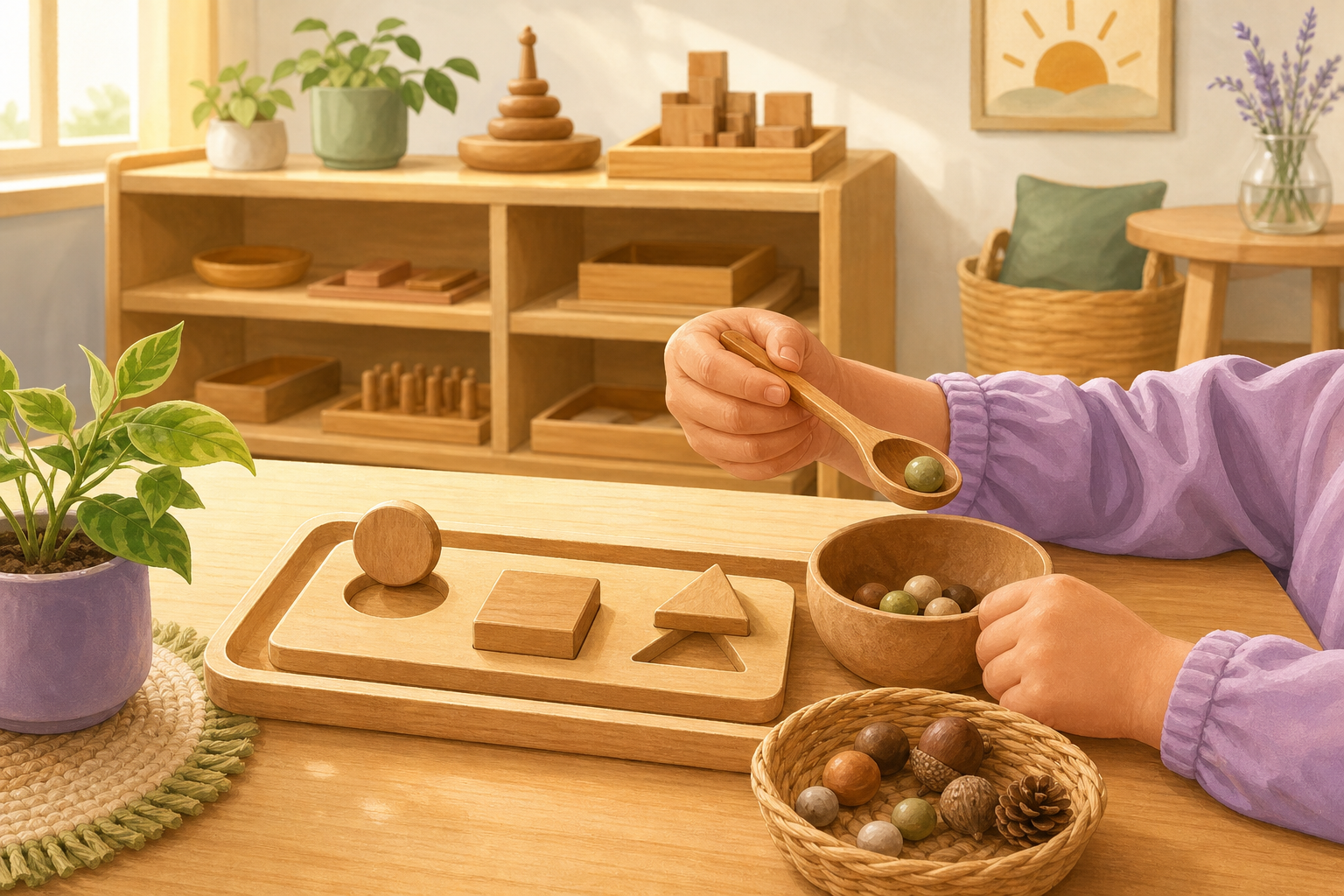
When families hear the word Montessori, they may picture carefully arranged shelves, child-sized tools, or children working independently. Those details can be part of the approach, but Montessori-inspired learning is really about how adults prepare an environment and support a child’s growing abilities.
At Sunrise Montessori Homeschool, “Montessori-inspired” means we draw from practical, child-centered ideas while creating a warm, home-like early learning experience for children ages 3–5. We do not claim Montessori certification or accreditation. Instead, we use developmentally appropriate practices that encourage participation, curiosity, and respectful guidance.
Practical life builds everyday confidence
Practical life activities are purposeful tasks children recognize from daily life. Pouring water, carrying a tray, wiping a table, sorting objects, buttoning clothing, or helping prepare a snack may look simple to an adult. For a preschooler, these experiences can offer meaningful practice with coordination, sequencing, care, and responsibility.
The goal is not speed or perfection. A child is given enough time to try, notice what happened, and try again with calm support. Adults may demonstrate a task slowly, then step back so the child can participate as independently as they are ready to do.
Independence grows through real participation
Young children often want to do things for themselves. A prepared environment can make that desire easier to support. Materials are placed where children can reach them, routines are consistent, and tasks are broken into manageable steps. Independence does not mean a child is left without help. It means the adult offers the right amount of assistance while allowing the child to remain an active participant.
Hands-on learning makes ideas concrete
Preschoolers learn through movement, touch, repetition, conversation, and observation. Hands-on materials give children something concrete to explore. They may match shapes, compare sizes, sort objects, count real items, listen for sounds, or use art materials with intention. These experiences invite children to engage more than one sense and to discover relationships through action.
Concentration develops with time and repetition
A calm period of uninterrupted activity can help a child remain with a chosen task. When children are not rushed from one activity to another, they have more opportunity to repeat a process, solve a small problem, or complete a cycle of work. Adults protect that concentration when possible while still maintaining clear routines and safety expectations.
Choice works best within thoughtful limits
Montessori-inspired environments may offer children choices, but those choices are not unlimited. An adult selects safe, appropriate options and teaches how materials are used and returned. A child might choose between several available activities, decide where to work, or repeat something that is especially interesting. Clear limits help the environment remain peaceful and understandable for everyone.
Each child’s pace deserves respect
Children develop skills at different rates and may show readiness in different ways. Respecting a child’s pace means observing carefully, offering an appropriate next step, and avoiding unnecessary comparison. It does not mean expectations disappear. Children still receive guidance, boundaries, and encouragement, but learning is not treated as a race.
Families interested in Sunrise can learn more about our Montessori-inspired program features. If this kind of small, home-like setting may fit your family, you can also book a visit to meet Sümeyye, see the environment, and ask questions.
“This home is registered with the Child Care Regulation department of the Health and Human Services Commission but is not licensed or regularly inspected.”