
Independence grows through small, repeated experiences. For children ages 3–5, everyday tasks can offer meaningful chances to practice coordination, make choices, solve simple problems, and contribute to family life. The goal is not speed or perfection. It is giving a child an appropriate role, enough time to try, and calm support when help is needed.
1. Help prepare a simple snack
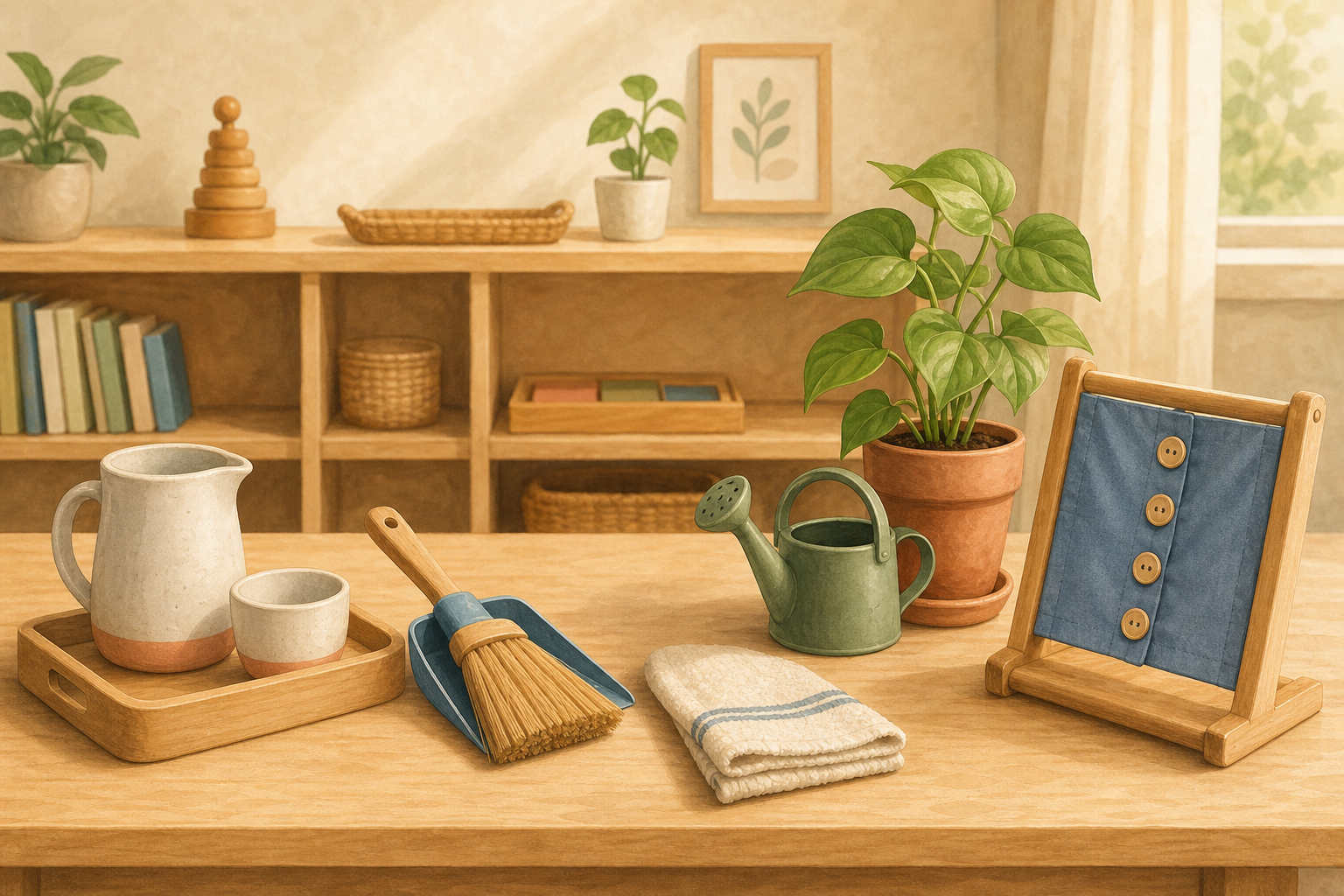
A preschooler can wash fruit, peel a banana, spread a soft topping with a child-safe utensil, or pour water from a small pitcher. Choose one step that matches your child’s current skills and supervise closely. A tray can keep the materials organized and make spills easier to manage. Pouring, scooping, and transferring also give children hands-on practice with controlled movement.
2. Care for personal belongings
Putting shoes in one place, hanging a backpack on a low hook, or placing dirty clothes in a basket can become part of a predictable routine. Keep the setup simple and physically accessible. A child is more likely to participate when the hook, shelf, or basket is within reach and the expectation stays consistent. One gentle reminder is usually more useful than completing the task immediately for them.
3. Take part in everyday cleaning
Young children often enjoy real, useful work. They can wipe a low table, sweep crumbs with a child-sized brush, match socks, or carry an unbreakable dish to the counter. Show the task slowly, then let the child attempt it. Use safe tools and avoid harsh cleaning products. A spill or uneven result is part of learning, not a reason to remove the opportunity.
4. Care for plants
Watering a sturdy houseplant can help a child notice cause and effect while practicing care for the environment. Mark a small fill line on the watering can so the amount is manageable. Families can also invite children to remove a dry leaf or gently wipe dust from a broad leaf. Keep plants and tools child-safe, and explain that watering happens on certain days rather than whenever the child wishes.
5. Practice dressing skills
Buttons, zippers, socks, and simple fasteners require patience and coordination. Allow extra time when the schedule is not rushed. You might begin by letting your child pull up an already-started zipper or choose between two weather-appropriate shirts. If frustration rises, offer the smallest amount of help needed to continue. Progress often comes through many brief attempts.
How adults can make everyday tasks easier to learn
Start with one task, demonstrate it in a few clear steps, and keep materials in the same place. Use neutral language such as, “The water spilled; let’s get the cloth,” instead of turning mistakes into a test. Step in for safety, but leave room for effort. Some days a child will participate eagerly; on other days, the same task may feel difficult.
This patient, practical approach reflects many Montessori-inspired learning principles: accessible materials, purposeful movement, real responsibility, and respect for a child’s developing abilities. Everyday independence is built one manageable experience at a time.