
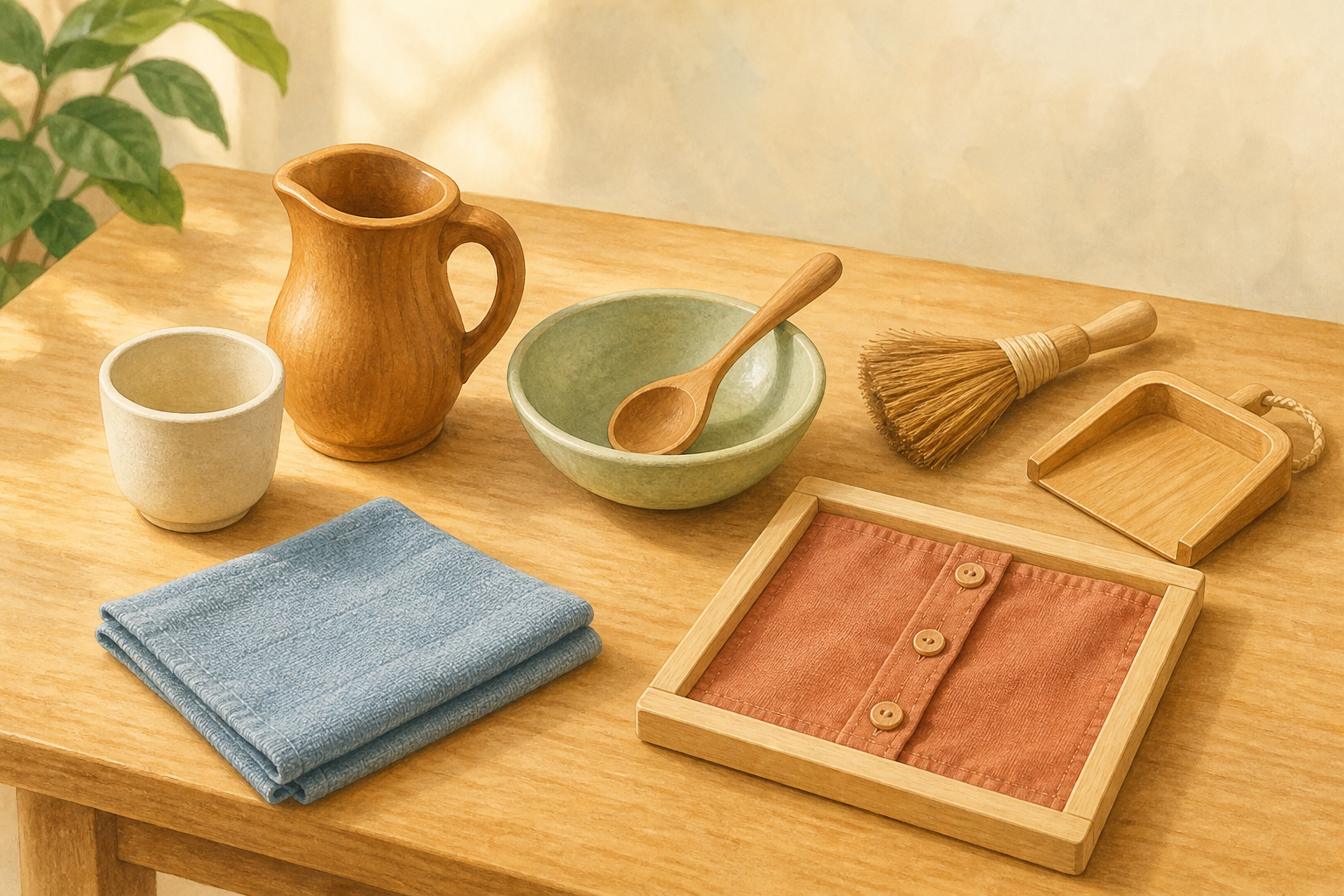
Preschoolers often want to participate in the real work happening around them. Pouring water, wiping a table, matching socks, and caring for a plant may seem ordinary to adults, but these tasks give children ages 3–5 meaningful ways to practice coordination, concentration, and responsibility.
In Montessori-inspired learning, these experiences are often called Practical Life activities. The goal is not perfect performance or faster chores. It is to offer manageable, purposeful work that a child can repeat and gradually do with less help. Families can begin with familiar materials and adjust each task to the child’s current abilities.
What Makes an Activity “Practical Life”?
A Practical Life activity usually has a clear purpose, a simple sequence, and real tools sized or arranged so a young child can use them safely. It may involve caring for oneself, caring for the home, preparing food, or practicing courtesy. The best activities connect with daily routines instead of feeling like a separate lesson.
These activities complement other everyday tasks that can encourage independence. An adult demonstrates slowly, then gives the child time to try. Some children will repeat a task many times; others may watch first and return later.
Five Practical Activities to Try
1. Pouring Water
Place a small amount of water in a lightweight pitcher and set out one cup on a tray. Show how to hold the handle, steady the pitcher, pour slowly, and wipe a spill. Start with only enough water for one pour. A sponge or cloth on the tray makes cleanup part of the activity.
2. Washing Produce
Offer a bowl of water, a soft brush, and one or two sturdy fruits or vegetables. A child can scrub, rinse, and place each item on a towel. Close supervision is important around water, and an adult should choose foods and tools that are appropriate for the child.
3. Folding Small Cloths
Use washcloths, napkins, or small towels with simple shapes. Demonstrate lining up two corners and smoothing the fold. Exact edges are not necessary. The value comes from practicing a sequence and contributing to a real household routine.
4. Sweeping a Small Area
A child-sized hand broom and dustpan can make sweeping more manageable. Mark a small target area with removable tape or use a few large, easy-to-see crumbs from a planned activity. Show how to brush everything into one pile before moving it into the dustpan.
5. Caring for a Plant
Choose one sturdy, non-toxic plant and provide a small watering container. Show the child how to check the soil, add a measured amount of water, and gently wipe broad leaves. Keep all plants out of reach when their safety is uncertain, and supervise the activity.
How to Introduce Practical Life Work
Prepare one activity at a time and keep the number of steps modest. Demonstrate with slow movements and few words so the sequence is easy to observe. Then step back while remaining available. If something spills or lands in the wrong place, calmly show how to restore the area rather than taking over immediately.
It also helps to place activities within a predictable daily routine. A child might fold cloths after laundry, water a plant before breakfast, or wipe the table after snack. Familiar timing can make participation easier to remember.
A Helpful Pace for Young Children
Children develop skills at different rates. Choose tasks that are safe, brief, and just challenging enough to invite effort without causing frustration. Stay nearby when water, food, breakable items, or tools are involved. With patient demonstrations and realistic expectations, ordinary family routines can become satisfying opportunities to practice useful skills.