
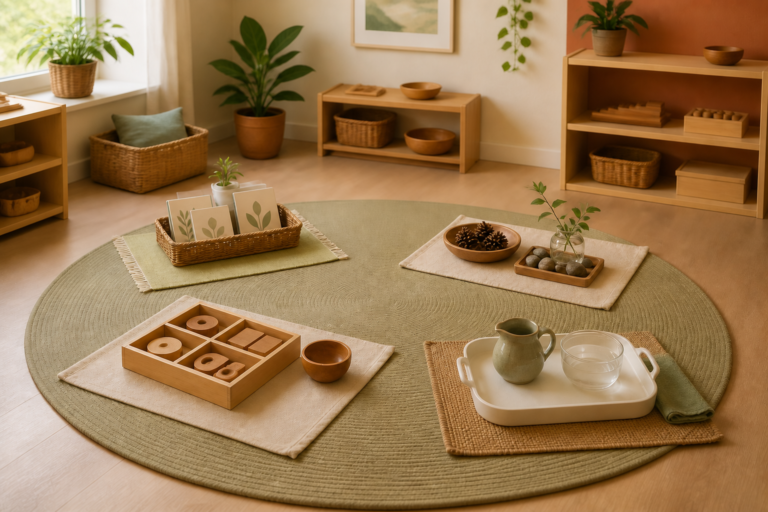
A first visit to an early childhood program can bring a mix of curiosity, excitement, and uncertainty. For children ages 3–5, a new room, new adults, and a different routine can feel like a lot to take in. A little preparation can help a child know what to expect without turning the visit into a big event.
Talk about the visit simply
A day or two before the visit, share a short, calm description: “We are going to see a school room, meet a teacher, and look at some activities.” Use words your child already understands. Avoid giving a long list of rules or promising that every part will feel easy. Let them know it is okay to watch quietly at first, ask a question, or stay close to you.
Practice the basic flow
Children often feel steadier when they recognize a few steps. You might practice putting on shoes, carrying a small bag, or saying hello and goodbye. Keep it light and brief. A familiar morning pattern can also help; predictable daily routines give children a helpful sense of what comes next.
Choose comfort without adding pressure
Dress your child in comfortable clothes that allow easy movement. Bring only what the program has asked for, along with any ordinary comfort item that has been approved. Try not to introduce a brand-new outfit, toy, or expectation on the same day. Familiarity can make it easier for a child to focus on the people and space around them.
Arrive with time to settle
Rushing can make a new experience feel bigger. If possible, arrive a few minutes early so your child can look around before the visit begins. Point out simple details: a shelf of books, a sink, a place to hang a coat, or an activity table. Naming what you see helps children organize a new environment at their own pace.
Let your child observe
Some children walk right in, while others need time beside a parent or caregiver. Both responses are normal. Rather than urging your child to join an activity immediately, allow a few quiet minutes to watch. You can offer a simple choice, such as whether they would like to look at a book or stand near a table. Small choices support participation without requiring it.
Keep goodbyes clear and warm
If the visit includes a brief separation, follow the program’s guidance and say goodbye clearly. Sneaking away can make it harder for a child to understand what happened. A short message such as “I will be back after you have some time to explore” is often enough. When you return, reconnect calmly and ask one open question, like “What did you notice?”
Use the visit to learn together
Parents can use a visit to notice how children are welcomed, how adults communicate, and how transitions are handled. Our preschool tour question guide can help families focus on practical details. A first program visit is not a test for a child; it is simply a chance for your family to gather information and see how the setting feels.