
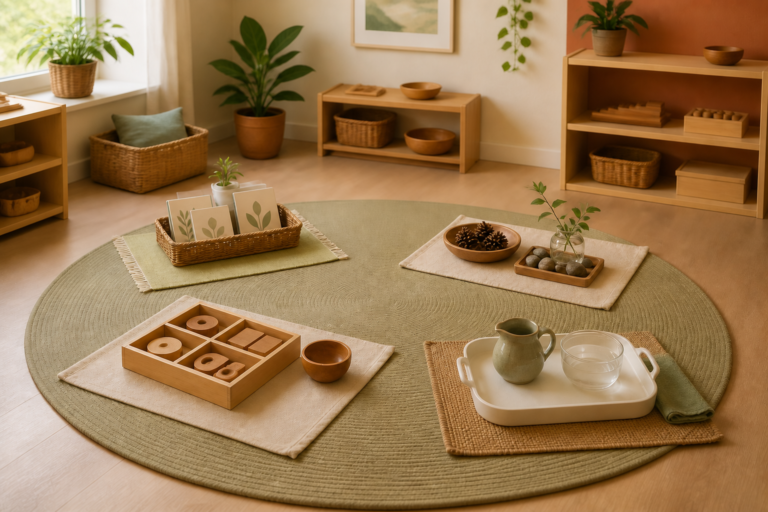
Fine-motor skills involve the small movements of hands and fingers that children use for tasks like turning pages, fastening clothing, drawing, and handling everyday objects. Preschoolers build these skills through many ordinary play and care routines.
Try simple transferring activities
Moving dry pasta with a spoon, placing pom-poms in a container, or using tongs to move soft items can invite controlled hand movements. Keep materials age-appropriate and supervise small items closely.
Include drawing and mark-making
Offer crayons, chalk, washable markers, or a paintbrush with water outside. Children do not need to make a recognizable picture; lines, dots, and repeated marks all give hands useful practice.
Use play dough for squeezing and shaping
Rolling, pinching, flattening, and cutting soft dough can strengthen hands while leaving room for imaginative play. A child might make pretend food, animals, or simply explore the texture.
Look for real-life jobs
Opening a lunch container, peeling a banana with help, turning a faucet, or matching socks are meaningful chances to use fingers and hands. Everyday tasks can be just as valuable as a special activity.
Keep the setup inviting
Put out one or two materials on a tray or table instead of offering a crowded choice. A clear setup can help a child begin independently and make cleanup easier afterward.
Avoid comparing children
Fine-motor development varies. Notice what your child enjoys and offer gentle opportunities to try again rather than measuring their work against another child’s.
Everyday play gives children many relaxed chances to strengthen coordination while doing things that feel interesting and useful. Families can also review practical questions for a preschool visit when they want to learn more about a program or routine.
Vary the movements
Hands develop through many kinds of movement. One day a child might tear paper for a collage; another day they may thread large beads, turn pages, or use a spray bottle outside. Variety keeps practice interesting and gives different muscles a chance to work.
Set up for comfort
A stable chair, a table at a comfortable height, and materials that are easy to reach can help children focus on the activity instead of struggling with the setup. If a task seems frustrating, making the materials larger or simpler is a thoughtful adjustment.
Include both hands
Many tasks naturally use two hands together, such as holding a bowl while stirring or keeping paper still while drawing. These everyday movements support coordination without needing a separate lesson.
Keep the next step realistic
With supporting fine-motor skills through everyday play, a small repeatable practice is usually more useful than trying to do too much at once. Families can notice what a child already manages, offer just enough support for the next step, and return to the idea on another day. This leaves room for children to be curious, to need help, and to develop in their own time.
Share observations, not pressure
A simple note about what a child enjoyed, avoided, or tried can help adults decide what to offer next. If a question or concern continues, families can talk with the people who know the child’s daily routine. Support works best when it is respectful, practical, and focused on the child in front of you.