
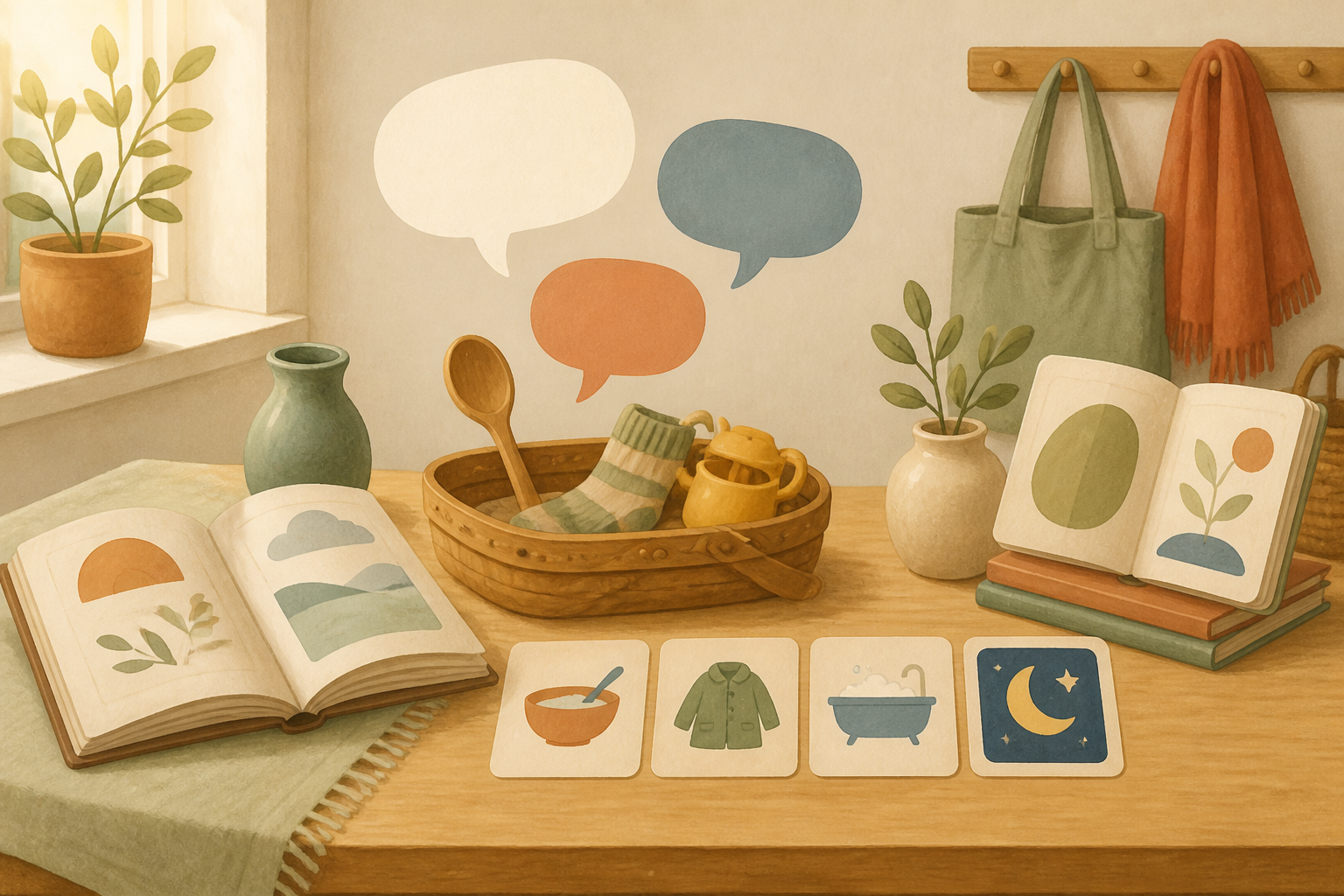
Young children build language through ordinary moments: getting dressed, preparing a snack, riding in the car, cleaning up, and settling down for bed. These repeated routines give children many chances to hear useful words, connect language with actions, and practice sharing their ideas.
Parents do not need special lessons or expensive materials. A calm conversation woven into the day can be meaningful. Children develop at different rates, so the goal is not to test or pressure them. It is to make language a natural, enjoyable part of family life.
Talk Through What You Are Doing
Simple narration helps connect words with real experiences. While preparing breakfast, you might say, “I am slicing the banana into round pieces,” or, “The oatmeal feels warm.” During dressing, name clothing, colors, textures, and actions: buttoning, pulling, folding, or fastening.
Use clear sentences, but do not feel you must talk constantly. Leave quiet space so your child can observe, respond, or ask a question.
Offer Choices That Invite Words
Choices can encourage children to listen and respond while also supporting independence. Try asking, “Would you like the red cup or the blue cup?” or, “Should we read the animal book or the garden book?” Begin with two manageable options. If your child points, you can model the words without demanding repetition: “You chose the blue cup.”
Pause and Give Time to Answer
Adults often move quickly, especially during busy routines. After asking a question, pause for several seconds. A child may need time to understand the words, organize a thought, and decide how to respond. Accept gestures, short phrases, and fuller sentences as part of the conversation.
Instead of correcting every mistake, gently model a slightly expanded sentence. If a child says, “Dog running,” you might reply, “Yes, the brown dog is running fast.” This keeps the exchange warm while offering useful language.
Use Rich but Familiar Vocabulary
Everyday tasks are full of descriptive words. Laundry offers empty, full, damp, dry, smooth, and rough. Cooking introduces pour, stir, measure, peel, and sprinkle. Outdoor routines can include shady, breezy, crunchy, enormous, or narrow.
In a Montessori-inspired approach, adults often use clear, precise names for objects and actions. Introduce one or two new words in context, then reuse them naturally later. This is more helpful than presenting a long list at once.
Tell and Retell Small Stories
Transitions are good times to talk about sequence. On the way home, recall what happened first, next, and last. Before bed, invite your child to describe one moment from the day. Photos of places or objects—not private family information—can also support conversation.
You can connect this storytelling habit with predictable daily routines. When children know what comes next, they may have more attention available for listening and participating.
Read, Sing, and Play With Sounds
Short songs during cleanup, rhymes in the car, and familiar books at bedtime make sound patterns enjoyable. Pause before a familiar word and let your child finish if they want to. Ask open questions such as, “What do you notice?” rather than quizzing for a single correct answer.
For another gentle way to combine conversation with hands-on participation, explore these simple Montessori-inspired activities families can try at home.
Keep Connection at the Center
Language grows through responsive back-and-forth interaction. Follow your child’s interests, repeat important words, and show that their message matters. Some days will be talkative; others may be quiet. Consistent, low-pressure conversation during familiar routines can provide many useful opportunities to listen, understand, and communicate.
If you have concerns about your child’s hearing, speech, or language development, consider discussing them with the child’s pediatrician or another qualified professional.